Cancer Prevention
Understanding cancer risk factors and prevention strategies to protect yourself and your loved ones.
Cancer
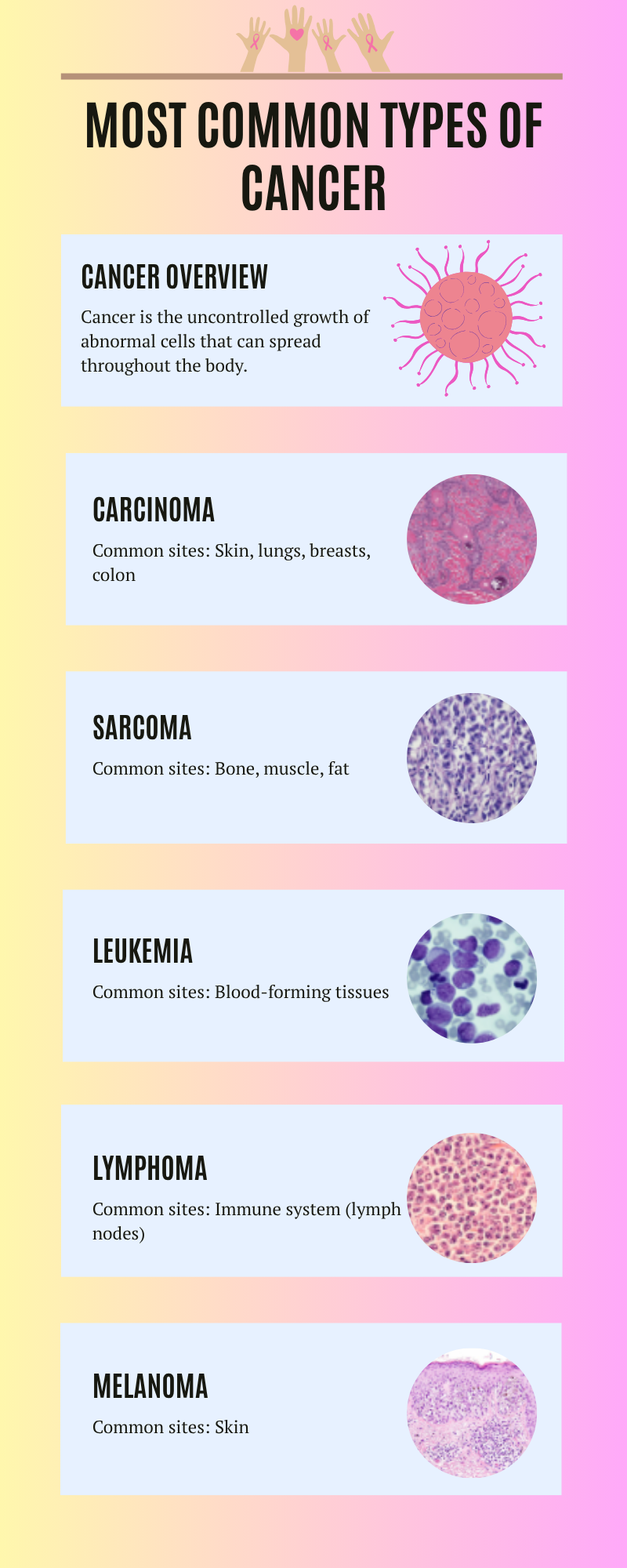
Cancer is a generic term for a large group of diseases that can affect any part of the body. A key characteristic of cancer is the uncontrolled growth of abnormal cells that multiply rapidly and extend beyond their normal limits. These cells can invade nearby tissues and spread to distant parts of the body — a process known as metastasis. The spread of cancer to other organs is the leading cause of cancer-related deaths (World Health Organization, 2025).
Global Cancer Overview
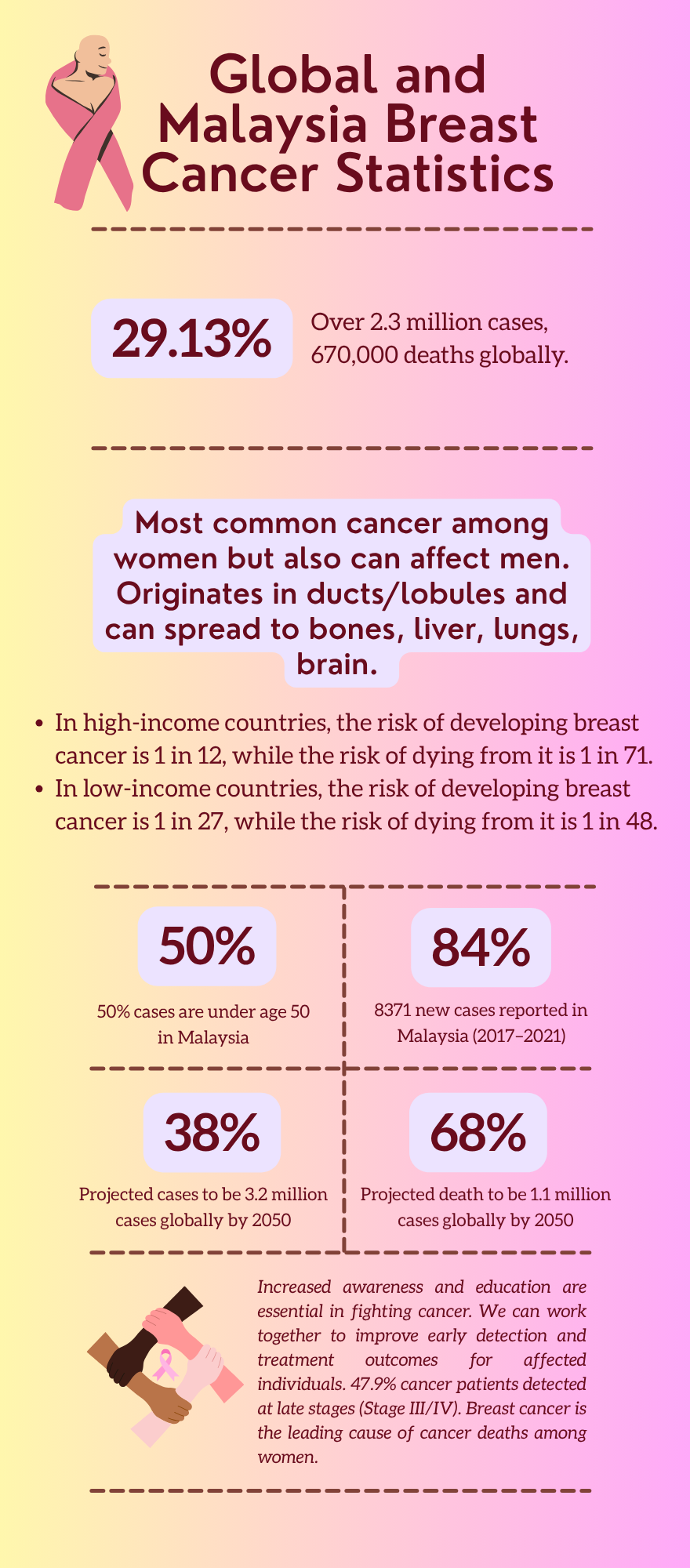
Cancer is a leading cause of death worldwide, accounting for nearly 10 million deaths in 2020, or nearly one in six deaths. The most common cancers are breast, lung, colon and rectum and prostate cancers (World Health Organization, 2025).
While cancer affects both men and women, certain types are more common depending on sex, age, and region.
Many cancers are linked to preventable risk factors such as tobacco use, alcohol consumption, unhealthy diet, physical inactivity and air pollution (World Health Organization, 2025).
Cancer in Malaysia
In Malaysia, cancer is a major public health concern. Based on the Malaysian National Cancer Registry Report (2017-2021), the top five most common cancers among male and female are:
Male
- Colorectal Cancer
- Lung, Trachea & Bronchus Cancer
- Prostate Cancer
- Liver Cancer
- Lymphoma Cancer
Female
- Breast Cancer
- Colorectal Cancer
- Lung, Trachea & Bronchus Cancer
- Corpus Uteri Cancer
- Ovary Cancer
Source: Ministry of Health Malaysia. Summary of Malaysia National Cancer Registry Report 2017-2021 (2024).
Mechanism & Development of Cancer
Cancer develops due to the uncontrolled proliferation of abnormal cells. These cells ignore the signals that regulate normal cell behaviour, multiply excessively, invade nearby tissues and organs, and can eventually spread throughout the body.
Cancer Staging is used to describe the size of a cancer and how far it has spread. Staging helps determine the most suitable treatment approach. Most types of cancer have 4 stages. Here is a summary of what the stages mean for most types of cancer (Cancer Research UK, n.d.).
Stage 1
Small and contained within the original organ.
Stage 2
Larger tumour, may involve nearby lymph nodes but hasn't spread extensively.
Stage 3
Larger cancer that may have invaded nearby tissues and lymph nodes.
Stage 4
Cancer has spread from where it started to another body organ (metastatic cancer).
Understanding Risk Factors
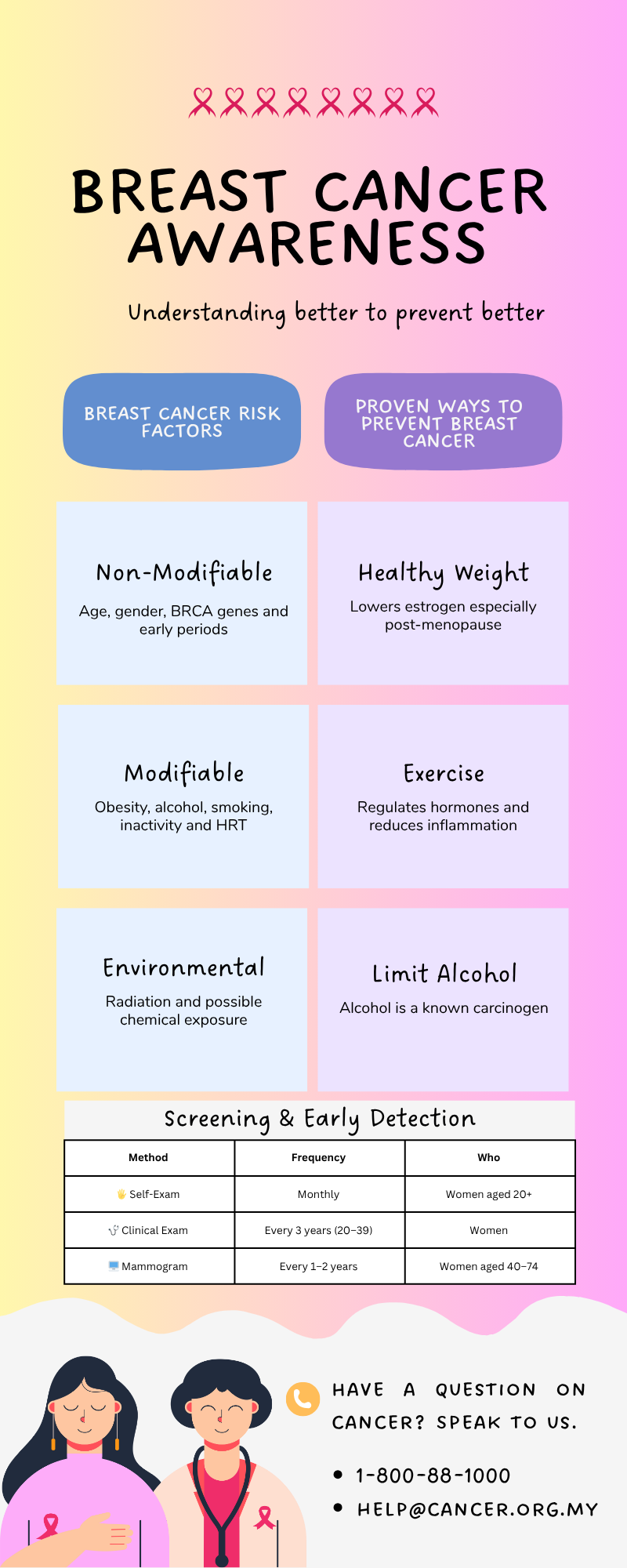
Cancer risk factors are generally divided into two categories.
A. Non-Modifiable Risk Factors
These are examples of factors we cannot change.
Ageing
The risk of cancer increases as we get older.
Gender
Certain cancers are more prevalent in specific genders.
Genetic Mutations
e.g., BRCA1/BRCA2 gene mutations can increase cancer risk.
Family History of Cancer
A family history of cancer may indicate a higher risk.
Personal History
Personal history of certain medical conditions can increase risk.
While these cannot be controlled, individuals at higher risk can benefit from earlier or more frequent screening.
B. Modifiable Risk Factors
These are examples of factors we can change to reduce cancer risk.
Tobacco Use
Smoking and tobacco use are leading causes of cancer.
Alcohol Consumption
Excessive alcohol intake increases the risk of several cancers.
Unhealthy Diet
A diet low in fruits and vegetables and high in processed foods increases risk.
Lack of Physical Activity
Regular exercise helps reduce cancer risk significantly.
Obesity
Being overweight or obese is linked to increased cancer risk.
Excessive Sun Exposure
Prolonged UV exposure increases the risk of skin cancer.
Certain Infections
e.g., HPV, Hepatitis B can increase the risk of developing cancer.
Addressing modifiable risk factors can significantly reduce the likelihood of developing many types of cancer.
Source: Bringing Education And Understanding To You (BEAUTY) booklet – Reducing Your Cancer Risk (2025).
How To Lower Your Risk Of Cancer
Based on World Health Organization, 30–50% of cancers are preventable. Prevention offers the most cost-effective long-term approach to controlling cancer.
Here are some preventative actions that we can take by addressing the risk factors and embracing healthy lifestyle choices (Rohail et al., 2025; World Health Organization, n.d.):
About Breast Cancer
Breast cancer develops when abnormal cells grow in breast tissue. It can occur in both women and men, although it is far more common in women.
In Malaysia, breast cancer is the most frequently diagnosed cancer among women. Based on the Malaysia National Cancer Registry Report 2017-2021, breast cancer is the most common cancer in the country, recording a percentage of 17.6% between 2017 to 2021.
Breast Cancer Signs & Symptoms
A retracted or inverted nipple
Breast or nipple pain
Lumps
Nipple discharge
Swelling
Changes to the skin texture
Lump around the collar bone or underarm
Redness or rash
Talk to your doctor if you notice any of these changes.
Source: Bringing Education And Understanding To You (BEAUTY) booklet – Breast Cancer (2025).
What To Consider If You Have An Increased Risk Of Breast Cancer
If you are at an increased risk of breast cancer, besides taking proactive steps to modify your lifestyle changes, here are some things you can consider that might help lower your chances of developing breast cancer (American Cancer Society, 2025):
Your health care provider can assess your risk of breast cancer and help you decide which of these options, if any, may be appropriate for you.
References
Cleveland Clinic. (2024, August 19). Cancer. Cleveland Clinic. https://my.clevelandclinic.org/health/diseases/12194-cancer
World Health Organization. (2025, February 3). Cancer [Fact sheet]. World Health Organization. https://www.who.int/news-room/fact-sheets/detail/cancer
National Cancer Institute (Institut Kanser Negara), Ministry of Health Malaysia. (2024). Summary of the Malaysia National Cancer Registry Report 2017–2021 [PDF]. Ministry of Health Malaysia. https://nci.moh.gov.my/images/pdf_folder/SUMMARY-OF-MALAYSIA-NATIONAL-CANCER-REGISTRY-REPORT-2017-2021.pdf
National Cancer Society Malaysia. (2025). Breast cancer [PDF]. National Cancer Society Malaysia. https://beauty.cancer.org.my/wp-content/booklets/eng/breast-cancer.pdf
National Cancer Society Malaysia. (2025). Reducing your cancer risk [PDF]. National Cancer Society Malaysia. https://beauty.cancer.org.my/wp-content/booklets/eng/reducing-your-cancer-risk.pdf
Cancer Research UK. (n.d.). Stages of cancer. Cancer Research UK. https://www.cancerresearchuk.org/about-cancer/what-is-cancer/stages-of-cancer
Rohail, A., Tunio, J., Hakro, A., Ahsan, M., Bashir, P., & Tunio, A. (2025). Modifiable risk factors and cancer risk: A systematic review. Journal of Clinical Research and Clinical Trials, 4(4), 1–6. https://bioresscientica.com/article/modifiable-risk-factors-and-cancer-risk-a-systematic-review
American Cancer Society. (2025, May 5). Can I lower my risk of breast cancer? American Cancer Society. https://www.cancer.org/cancer/types/breast-cancer/risk-and-prevention/can-i-lower-my-risk.html
World Health Organization. (n.d.). Preventing cancer. World Health Organization. https://www.who.int/activities/preventing-cancer